


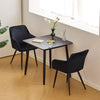
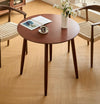
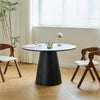
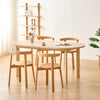


Designer dining tables
A designer dining table gives the room a distinctive character while remaining practical for meals. In our dining table collection, choosing a silhouette means balancing looks, comfort and proportions. A softly curved top, expressive base or understated finish can transform the space. To find your model, consider how its lines fit your interior, how it welcomes guests and how it supports everyday routines.
What makes a well-designed dining table?
Table design is about more than an unusual shape. It lies in the consistency between silhouette, materials and use. A successful detail can be subtle: the transition between a leg and the top, a curve that makes passing easier or a proportion that balances the overall volume. The table should remain pleasant to use once chairs are in place and dishes are served.
Clean lines and balanced proportions
Clean lines reveal the furniture's construction. The thickness of the top, angle of the legs and open spaces together form its design. A table can look light without being tiny, or substantial despite moderate dimensions. Compare front and side views to understand its actual presence.
In an interior already rich in patterns, a simple silhouette brings calm. In a more minimal room, a distinctive base can become the focal point. Balance comes from the relationship between elements rather than the number of decorative details.
Materials chosen to last
A beautiful material also needs to suit the way you live. Solid wood, veneered surfaces and other compositions have different characteristics. Check the product information for the tabletop and base materials and their care instructions. Durability becomes concrete when the table remains suited to your needs and can be kept in good condition.
Wooden dining tables are an option if you want a visually warm material. Look at the grain and finish: their decorative role matters as much as the overall shape.
Which designer table style suits your interior?
Contemporary style can be understated or bold. A modern table does not require replacing all your furniture; it can work with existing chairs or an antique sideboard. Identify what really appeals to you: soft curves, a crisp rectangle, contrasting materials or a sculptural presence. This starting point makes combinations more personal and coherent.
The Scandinavian spirit: simplicity and practicality
Scandinavian style readily combines restraint, warmth and practicality. Clear lines and a pleasing material give a table a welcoming presence. The aim is not to empty the room, but to choose elements that make meals simple and comfortable. Well-proportioned seating and soft lighting matter as much as the tabletop.
To keep the décor from feeling fixed, introduce a more expressive texture or a restrained touch of colour. Our thoughts on the place of minimalism in interior design offer more ideas for balancing simplicity and character.
Sculptural bases and organic tabletops: current design signatures
A sculptural base draws the eye below the tabletop, but check how much legroom it leaves. A wide base may change chair positions, while angled legs may extend beyond the footprint you expect. Assess the design from the perspective of someone using the table, not only as an outline.
An organically shaped top or rounded ends offers another form of expression. These curves can soften a straight-lined room and echo an enveloping chair back. To preserve harmony, give the feature enough surrounding space and avoid too many competing shapes.
Choosing the shape and size of a designer table
The best shape depends on the room and number of guests. An oval table can suit an elongated area while softening the ends. Round tables encourage conversation around a common centre. A rectangular top offers a more linear arrangement, useful when the dining area follows the length of the room.
Measure with the chairs in their positions for use. There must be room to pull them back, open nearby furniture and walk past. Also check the distance between the legs, which can determine the number of seats more directly than the tabletop length. A floor template helps compare models whose proportions look similar on screen.
Pairing your designer table with chairs and lighting
Chairs can continue the table's design or create contrast. If the base is expressive, simple seats let it stand out. If the table is restrained, more detailed chair backs add rhythm. Keep one shared feature, such as a colour or curve, and check armrest height against the underside of the top.
Lighting also shapes the dining room. Its size should remain in proportion to the table, with comfortable light for guests. A rug can define the dining area if it accommodates the chairs when pulled out. These combinations create a coherent interior without requiring a fully matching set.
Nordlys designer dining tables: good looks for everyday life
A Nordlys designer dining table should appeal to you as a whole and suit you in its details. Its elegance should extend to how easily you can sit at it. Before choosing, imagine a complete meal: people seated, dishes in the centre, movement around the table and chairs tucked away afterwards. This helps confirm that the design truly serves its purpose.
Choose proportions you appreciate beyond a passing trend, then a finish whose care feels straightforward. A table's timeless quality often comes from this balance: enough personality to add depth to your interior and enough restraint to suit its evolution. Explore the collection with equal attention to design and daily life.