


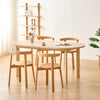
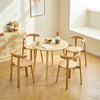


Scandinavian dining tables
A Scandinavian dining table gives the dining area a simple, warm presence. In our dining table selection, this spirit is expressed through attention to lines, proportions and use. Furniture supports home life without imposing a fixed décor: family meals, conversations and work can follow one another around the same tabletop. Compare the materials you like with the room's dimensions and the everyday comfort you want.
What defines a Scandinavian dining table?
Scandinavian style is less about one required detail than a way of combining appearance and practicality. Forms remain clear, materials add warmth and useful elements naturally find their place. A table can be understated while retaining a recognisable silhouette. Seating, lighting and textiles complete its expression in a minimal interior or a more personal setting.
Light wood, simple lines and practicality
Light wood often sets the tone, but balance also depends on the design. A well-proportioned top, an unobtrusive base and carefully finished transitions between elements create a welcoming silhouette. Tapered legs can make furniture look lighter; a more substantial base can give it a different character within a restrained setting.
Practicality should be concrete: legroom, usable dining surface and the ability to tuck chairs away. Before choosing a table for its style, consider how it meets your needs. A simple shape is truly pleasant only when it fulfils these basic requirements.
The hygge spirit: simplicity and Nordic warmth
Hygge evokes the pleasure of an interior where people feel good together. Around the table, it comes through comfortable lighting, welcoming seats and carefully chosen objects. A natural material and soft textile can contribute without requiring a perfectly matching set.
Above all, leave room for everyday life. A top that is easy to clear and chairs that move readily encourage impromptu meals. Nordic warmth does not come from accumulating accessories: it grows from a space where people enjoy sitting down, even for an ordinary moment.
Which woods and finishes suit a Nordic table?
When choosing materials, distinguish appearance from composition. A light finish can cover several different underlying materials, and a natural shade alone does not identify the wood species. Read the tabletop and base information, then compare care recommendations. This will help you find a table whose presence and requirements suit your home.
Light oak and beech: characteristic wood species
Oak and beech are often associated with Nordic interiors. Oak can have an expressive grain; beech generally looks finer and more even. Finishes alter their shades, however: a light appearance can be warmer, more golden or lightly tinted depending on the treatment.
In our wooden dining table collection, check the species actually stated for each model. If you want solid wood, look at which parts are made from it. Material choices are more meaningful when based on these details rather than simply a resemblance in a photograph.
Natural-looking, lasting finishes
A natural-looking finish can keep the grain clearly visible while protecting the surface. Care depends on the finish: oiled wood should not automatically be treated like varnished wood. Read the product instructions for suitable methods and care products. Matt or satin describes appearance; it does not by itself determine stain resistance.
To preserve the tabletop, remove spills promptly and use protection under hot dishes. Avoid harsh products and abrasive objects. Durability also rests on these simple habits, which preserve the material's beauty without unnecessary treatments. A well-cared-for table can accompany several changes in your décor.
Choosing the shape and size of your Scandinavian table
The shape should suit the room and how you welcome guests. A round table offers a soft outline and gathers people around a common centre. An oval or organic shape extends this spirit into an elongated arrangement. A rectangle provides more linear seating, useful when the dining area follows the room's proportions.
Measure the tabletop with seats in use. Routes to the kitchen, space to pull chairs back and access to the sideboard must remain clear. Also check the width between the legs, especially if your chairs have armrests. Furniture that looks light can still need a significant footprint.
Finally, distinguish everyday seating from occasional needs. If you compare an extendable table with a fixed model, look at the entire arrangement in both configurations. Scandinavian style values real practicality: a table suited to your routine is more convincing than one chosen only for its maximum capacity.
Creating a harmonious Scandinavian dining room
To create a harmonious dining room, start with two or three common elements: a wood shade, a textile colour or a curved line. You do not need exactly the same finish on every piece. A slight contrast adds depth and prevents an overly uniform arrangement.
Chairs largely determine the atmosphere around the tabletop. Enveloping backs add softness, while a slimmer frame preserves lightness. Check height and width before considering colour combinations. Consistent comfort gives the arrangement its real unity.
In an open-plan room, Scandinavian armchairs can continue the material palette in the living area. Keep the zones distinct enough to preserve walking routes. A suitable rug, restrained pendant light and selected textiles are often enough to link the spaces. For more personality, our article on minimalism and its evolution in interior design offers further thoughts. An interior can stay simple while making room for objects you cherish.
Nordlys Scandinavian dining tables: approachable Nordic style
A Nordlys Scandinavian dining table lets you explore Nordic style through simple choices: a suitable shape, pleasing materials and the right proportions. The style's accessibility also comes from this freedom to combine pieces. Introduce the table alongside existing furniture, then gradually change the atmosphere through seating or lighting.
Before choosing, picture an ordinary meal as well as a celebration. Do guests have enough room? Does the tabletop hold the dishes comfortably? Can people still move around naturally? These questions provide a solid basis for your decision.
Explore the collection with lasting furniture in mind. Timeless design does not remove character; it allows material, light and everyday uses to find their balance. Your dining corner can remain warm, bright and easy to live with as the seasons and your preferences change.