


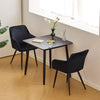
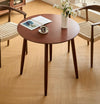
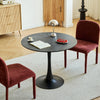
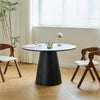
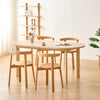
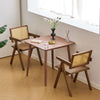


Dining tables for small spaces
Fitting a dining table into a small space means accommodating several uses within a limited area. In our dining table collection, placement matters as much as dimensions. A studio, kitchen or compact apartment can include a proper dining corner if you preserve walking routes and choose suitable seating. The aim is an everyday practical space that can also adapt when you entertain or rearrange the room.
How do you fit a dining table into a small space?
Start by considering when you will use the table. Is it only for meals, or also for work, games and occasional activities? Defining these uses helps you choose a large enough tabletop without oversizing it. Then draw the existing layout, including doors, storage openings and the most-used walking routes. Available space is about more than the empty area in the middle of the room.
Find the right position: a wall, corner or window
Placing a table near a wall can free up the centre of the room, but may restrict access to one seat. A corner creates a more enveloping dining area; a window brings light, provided it can still open and the curtains remain accessible. Also check nearby radiators and kitchen constraints.
A wall-mounted or folding solution may meet some needs, but check availability and installation requirements before considering it. For a freestanding table, compare different orientations: rotating the tabletop can sometimes improve the layout without reducing seating.
Measure the walking space around the table
Measure with chairs pulled out and neighbouring furniture doors open. Adequate clearance should let people stand up and reach other parts of the apartment. As an initial guideline, around 80 to 90 cm between the tabletop and an obstacle can help allow for pulling out a chair; frequently used routes often need more.
The base matters too. Protruding legs or a bulky base can obstruct movement despite a small tabletop. Round tables offer a continuous outline worth comparing, but their footprint with chairs needs measuring just as carefully as a rectangle's.
Extendable, compact or occasional: which space-saving solution?
A space-saving solution meets a specific need. A fixed size keeps the dining area always available; an extendable model adapts capacity to the occasion; an occasional table can supplement an existing arrangement. No single solution suits every small space. Compare setup time, any storage needs and the area occupied in each configuration.
Extendable tables for entertaining without crowding the room
An extendable table is useful when the number of guests genuinely changes. Check the mechanism, open dimensions and space for the extension leaf. If opening it means moving several heavy pieces of furniture, you may rarely use its flexibility. The right arrangement should remain easy to set up.
Also check how many extra seats you need and where they will be stored. Space saving concerns the whole arrangement, not only the table. Compare the features actually specified for each model: a compact shape does not automatically mean it extends or transforms.
Small fixed tables for a permanent dining corner
A small fixed table suits meals that usually involve the same number of people. It avoids repeated adjustments and keeps the layout clear. The table can occasionally serve as a desk, then return to dining once accessories are put away.
To make this pleasant, provide nearby storage for objects that would clutter the top. A compact interior feels brighter when the main surfaces remain clear. A simple table in the right place with well-proportioned seats often provides more comfort than a multifunctional piece that takes effort to change each time.
Make the most of space with the right seating
Chairs directly affect the space needed. Check width, depth and armrest height to see whether they fit under the top. Stackable chairs can help with entertaining if that feature is stated, but they still need storage space. Visually light backs can also preserve a sense of openness.
Dining benches sometimes allow several seats to tuck under the table. Compare their length with the distance between the legs. A dining banquette against a wall creates a welcoming corner, but access to the middle seats needs checking. Making the most of space means choosing seating for your layout without sacrificing comfort simply to save floor area.
Nordlys dining tables for small spaces: everyday flexibility
To choose a Nordlys dining table for a small space, connect three criteria: the number of seats used, the footprint of the whole arrangement and the ease of switching between uses. Simple Scandinavian design can support this balance, with furniture that adds character without dominating the room.
Explore our dining room selection to create a coherent arrangement, then read our ideas for multifunctional furniture for small spaces. A layout tip is useful only if it truly simplifies daily life. Keep the dining corner easy to access, the tabletop pleasant to use and storage solutions realistic: your small space will gain comfort as well as practicality.